Aflatoxin Explained
Food safety has become a global priority as contamination from naturally occurring toxins continues to challenge food manufacturers, exporters, testing laboratories, and regulatory agencies. Among these contaminants, mycotoxins are some of the most dangerous because they can develop during crop cultivation, harvesting, storage, and transportation without visible signs of spoilage.
One of the most concerning groups of mycotoxins is aflatoxins, which frequently contaminate cereals, nuts, spices, oilseeds, dairy products, and animal feed. Even at extremely low concentrations, aflatoxins can pose serious health risks and lead to rejected export consignments, product recalls, and regulatory non-compliance.
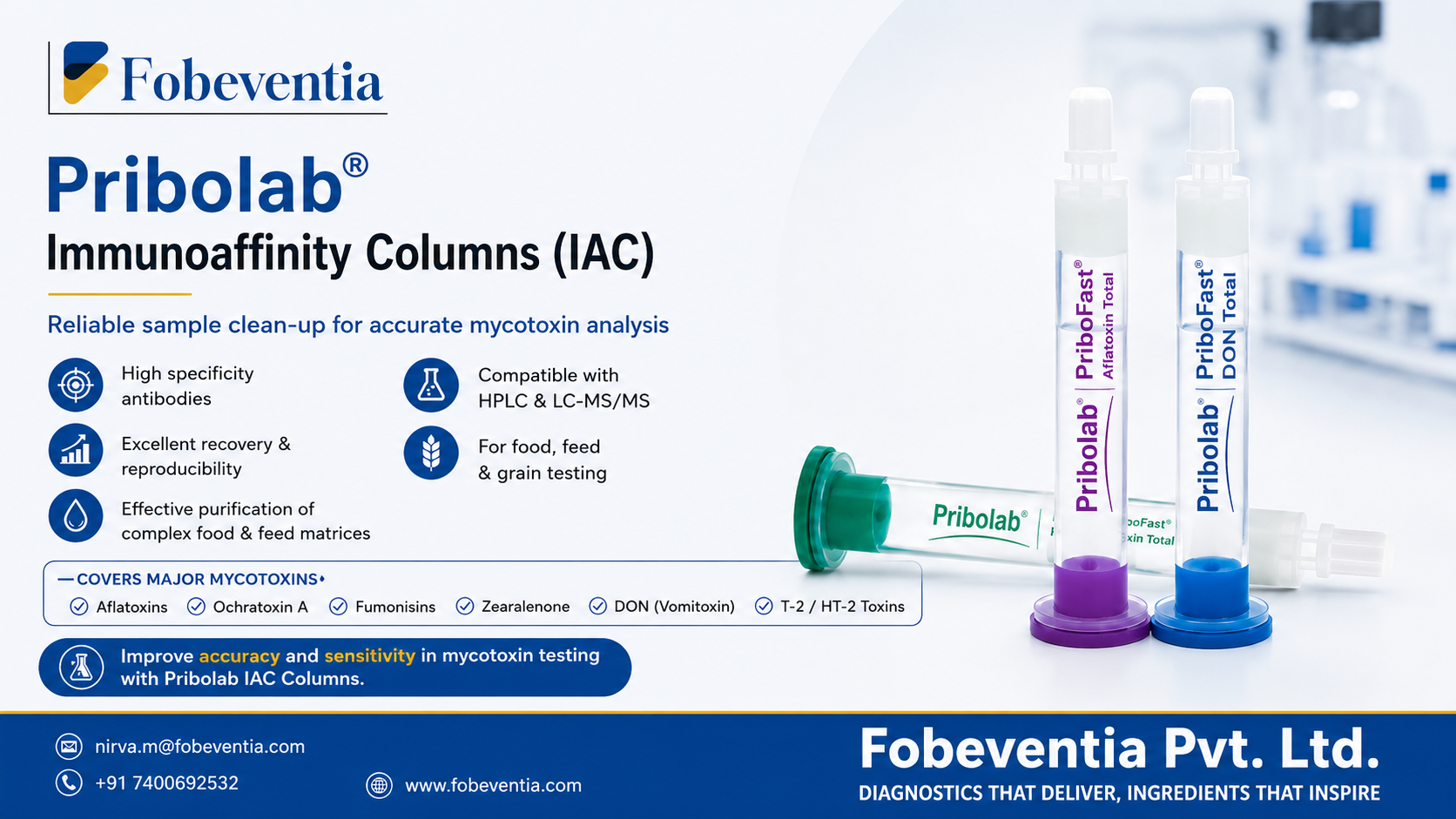
For laboratories involved in food safety testing, accurate detection begins with proper sample preparation. This is why Mycotoxin Immunoaffinity Columns have become the preferred cleanup solution before HPLC or LC-MS/MS analysis, offering highly selective purification and improved analytical performance.
What are Mycotoxins?
Mycotoxins are toxic secondary metabolites produced by various fungi, primarily species of Aspergillus, Penicillium, and Fusarium. These toxins develop under favorable temperature and humidity conditions and contaminate agricultural commodities throughout the food supply chain.
Common food products affected include:
- Maize
- Wheat
- Rice
- Peanuts
- Tree nuts
Spices
- Coffee
- Cocoa
- Milk and dairy products
- Animal feed
Unlike bacterial contamination, mycotoxins cannot be completely eliminated through cooking or conventional food processing, making laboratory testing essential for food safety compliance.
What is Aflatoxin?
Aflatoxins are among the most toxic naturally occurring mycotoxins produced mainly by Aspergillus flavus and Aspergillus parasiticus. These fungi thrive in warm and humid climates, making contamination particularly common in tropical and subtropical regions.
Aflatoxins frequently occur in:
- Groundnuts
- Corn
- Wheat
- Rice
- Pistachios
- Almonds
- Chili powder
- Turmeric
- Animal feed
- Milk
Because of their carcinogenic nature, regulatory authorities worldwide have established strict maximum permissible limits for aflatoxins in food and feed products.
Types of Aflatoxin
There are several types of aflatoxin, each produced by Aspergillus fungi under specific environmental conditions. While they share similar chemical structures, their toxicity, occurrence, and regulatory importance vary. The five major types of aflatoxins are Aflatoxin B1, Aflatoxin B2, Aflatoxin G1, Aflatoxin G2, and Aflatoxin M1. Understanding these toxins is essential for selecting the appropriate analytical method and ensuring compliance with food safety regulations.
1. Aflatoxin B1
Among all types of aflatoxin, aflatoxin B1 is the most toxic, most prevalent, and the most extensively studied. It is primarily produced by Aspergillus flavus and Aspergillus parasiticus and is classified as a Group 1 carcinogen by the International Agency for Research on Cancer (IARC), meaning there is sufficient evidence that it can cause cancer in humans.
Aflatoxin B1 commonly contaminates agricultural commodities such as maize, peanuts, rice, wheat, pistachios, almonds, spices, and animal feed, particularly when crops are exposed to warm and humid storage conditions. Long-term dietary exposure has been linked to liver cancer, impaired immune function, and growth retardation in children.
Due to its high toxicity and strict regulatory limits worldwide, aflatoxin B1 is routinely monitored in food safety laboratories using highly sensitive analytical techniques such as HPLC and LC-MS/MS. Accurate sample cleanup using immunoaffinity columns plays a critical role in obtaining reliable quantitative results.
2. Aflatoxin B2
Aflatoxin B2 is chemically similar to Aflatoxin B1 but occurs in lower concentrations and exhibits comparatively lower toxicity. It is often detected alongside aflatoxin B1, as both toxins are produced by the same fungal species under similar environmental conditions.
Although AFB2 is considered less hazardous than AFB1, its presence still contributes to overall aflatoxin contamination. For this reason, many food safety regulations specify limits for total aflatoxins, which include both B-type and G-type aflatoxins.
Food testing laboratories routinely analyze AFB2 during comprehensive mycotoxin screening to ensure compliance with national and international food safety standards. Reliable detection requires effective sample purification to minimize matrix interference before chromatographic analysis.
3. Aflatoxin G1
Aflatoxin G1 derives its name from the green fluorescence it emits when exposed to ultraviolet light during chromatographic analysis. It is mainly produced by Aspergillus parasiticus and is frequently found together with other types of aflatoxin in contaminated cereals, nuts, spices, and oilseeds.
Although AFG1 is generally less toxic than aflatoxin B1, it remains a significant food safety concern because it contributes to total aflatoxin levels and poses health risks following prolonged exposure. Food exporters and manufacturers are therefore required to monitor its concentration to meet regulatory requirements in international markets.
Modern analytical methods such as HPLC with fluorescence detection and LC-MS/MS can accurately quantify AFG1 following immunoaffinity column cleanup.
4. Aflatoxin G2
Aflatoxin G2 is another member of the aflatoxin family that typically occurs alongside Aflatoxin G1. Like G1, it fluoresces green under ultraviolet light, although it is generally present at lower concentrations and exhibits lower toxicity compared to other aflatoxins.
Despite its relatively lower toxic potential, AFG2 is still included in routine food safety monitoring because it contributes to total aflatoxin contamination. Regulatory authorities often require laboratories to report combined levels of AFB1, AFB2, AFG1, and AFG2, particularly for products intended for export.
Accurate determination of AFG2 depends on efficient sample preparation techniques that selectively isolate the toxin while removing interfering substances from complex food matrices.
5. Aflatoxin M1
Unlike the other types of aflatoxin, aflatoxin M1 is not produced directly by fungi in crops. Instead, it is formed when dairy animals consume feed contaminated with aflatoxin B1. During digestion, AFB1 is metabolized in the liver and converted into aflatoxin M1, which is subsequently excreted into milk.
As a result, AFM1 can be found in raw milk, pasteurized milk, cheese, yogurt, infant formula, and other dairy products. Since milk is widely consumed by infants and young children, regulatory authorities have established extremely low permissible limits for aflatoxin M1 to protect public health.
Dairy processors and food testing laboratories routinely screen milk and dairy products for AFM1 using immunoaffinity column cleanup followed by HPLC or LC-MS/MS analysis. Highly selective sample preparation is essential for achieving accurate detection at the trace levels required by food safety regulations.
Sources of Aflatoxin Contamination
Aflatoxins may enter the food chain at multiple stages.
Common causes include:
- High moisture during storage
- Warm climatic conditions
- Poor drying practices
- Damaged grains
- Insect infestation
- Improper transportation
- Long-term warehouse storage
Industries at higher risk include:
- Grain processing
- Spice manufacturing
- Dairy production
- Animal feed production
- Food exports
- Nutraceutical manufacturing
Health Risks Associated with Aflatoxins
Exposure to aflatoxins can affect both humans and animals.
Potential health impacts include:
- Liver toxicity
- Liver cancer
- Suppressed immune function
- Reduced growth in children
- Kidney damage
- Reduced livestock productivity
- Poor animal health
Since symptoms may not appear immediately, laboratory monitoring is essential for early detection and prevention.
Why Accurate Aflatoxin Testing is Essential
Food manufacturers today must comply with national and international food safety regulations.
Routine testing helps organizations:
- Prevent contaminated products from reaching consumers
- Meet export requirements
- Maintain brand reputation
- Reduce product recalls
- Improve food quality assurance
- Ensure regulatory compliance
Testing is especially critical for exporters dealing with cereals, spices, peanuts, dairy products, and animal feed.
Methods Used for Aflatoxin Detection
Several analytical techniques are available for aflatoxin analysis.
These include:
ELISA
Suitable for rapid screening but may require confirmatory analysis.
HPLC
High Performance Liquid Chromatography remains one of the most widely accepted techniques for aflatoxin quantification.
LC-MS/MS
Provides highly sensitive multi-mycotoxin analysis with excellent specificity.
Fluorescence Detection
Frequently used with HPLC for aflatoxin analysis.
However, regardless of the analytical instrument, sample cleanup is one of the most critical steps for obtaining accurate results.
Why Immunoaffinity Columns are Preferred for Mycotoxin Analysis
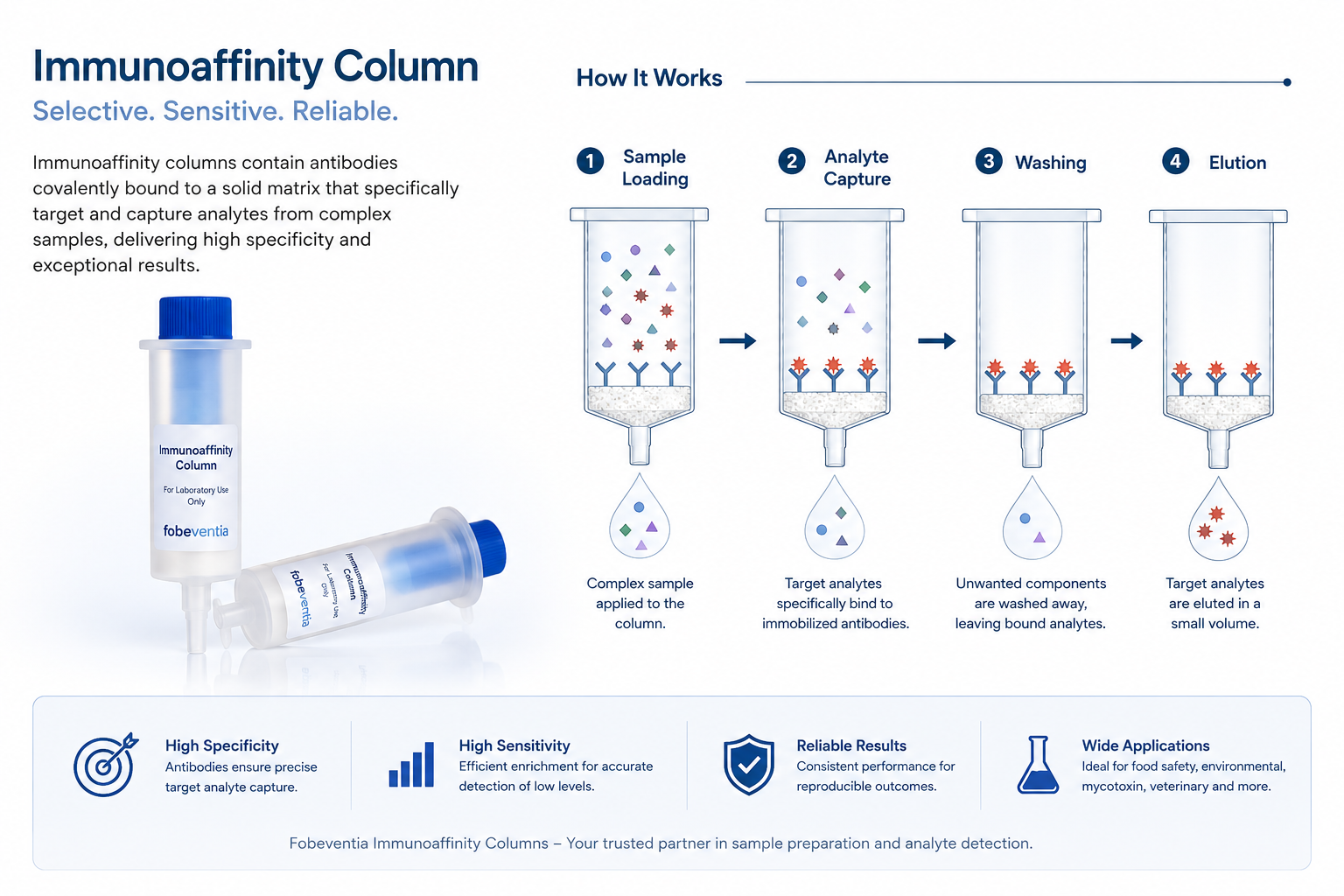
Food samples often contain pigments, oils, proteins, carbohydrates, and other matrix compounds that interfere with chromatographic analysis.
Mycotoxin Immunoaffinity Columns use highly specific antibodies to selectively bind target toxins while removing unwanted matrix components before HPLC or LC-MS/MS analysis. This selective cleanup significantly improves analytical reliability.
Major benefits include:
- Highly selective toxin purification
- Cleaner chromatograms
- Improved recovery rates
- Lower matrix interference
- Better detection sensitivity
- Increased analytical accuracy
- Extended HPLC column life
- Improved regulatory compliance
These advantages make immunoaffinity columns a preferred choice for laboratories performing routine mycotoxin testing across food, feed, dairy, spice, and grain industries.
Industries that Require Routine Mycotoxin Testing
Routine mycotoxin monitoring is essential for:
- Food testing laboratories
- Dairy testing laboratories
- Grain processors
- Spice manufacturers
- Animal feed manufacturers
- Food exporters
- Contract testing laboratories
- Government food safety laboratories
- Research institutions
Choosing the Right Immunoaffinity Column
Different analytical applications require different cleanup columns.
Laboratories may require dedicated solutions for:
- Aflatoxin B1
- Total aflatoxins
- Aflatoxin M1
- Ochratoxin A
- Fumonisins
- Zearalenone
- DON
- T-2 toxins
Selecting the appropriate immunoaffinity column ensures high recovery, excellent reproducibility, and compatibility with HPLC, UHPLC, and LC-MS/MS workflows.
Why Choose Fobeventia for Mycotoxin Immunoaffinity Columns?

For laboratories seeking reliable sample cleanup solutions, Fobeventia offers a comprehensive portfolio of Mycotoxin Immunoaffinity Columns designed for highly selective purification of aflatoxins and other regulated mycotoxins before chromatographic analysis.
Fobeventias solutions support testing across a wide range of matrices, including grains, spices, dairy products, nuts, cereals, animal feed, and processed foods. Their immunoaffinity columns are compatible with HPLC, UHPLC, and LC-MS/MS workflows, helping laboratories achieve cleaner extracts, improved recovery rates, and greater analytical confidence.
Conclusion
Aflatoxins remain one of the most significant food safety challenges worldwide. From aflatoxin B1, the most toxic member of the aflatoxin family, to aflatoxin M1 in dairy products, effective monitoring is essential to protect consumers, maintain regulatory compliance, and safeguard brand reputation.
As food testing requirements continue to become more stringent, laboratories need highly reliable sample preparation methods. Mycotoxin Immunoaffinity Columns provide the selective cleanup required for accurate HPLC and LC-MS/MS analysis, enabling dependable detection of aflatoxins and other mycotoxins across diverse food and feed matrices.
aflatoxin b1, types of aflatoxin, aflatoxin m1, mycotoxins, Fobeventia, Immunoaffinity Column, Mycotoxin Immunoaffinity Columns, mycotoxin testing, HPLC Immunoaffinity Columns, Immunoaffinity Columns (IAC), Testing Solutions