Immunoaffinity Columns (IAC): The Gold Standard for Accurate Mycotoxin Sample Clean-Up
Why Sample Clean-Up Matters in Mycotoxin Analysis
Mycotoxins are naturally occurring toxic compounds produced by certain species of fungi that contaminate cereals, grains, animal feed, spices, nuts, dairy products, coffee, and many other agricultural commodities. Even at extremely low concentrations, these contaminants pose serious health risks to humans and animals while creating significant regulatory challenges for food manufacturers, exporters, and testing laboratories.
As regulatory limits become increasingly stringent worldwide, laboratories require analytical methods capable of delivering highly accurate, reproducible, and sensitive results. While advanced analytical instruments such as HPLC, UHPLC, and LC-MS/MS provide exceptional detection capabilities, their performance depends heavily on one critical step —sample preparation.
This is where Immunoaffinity Columns (IAC) have become the industry benchmark for mycotoxin sample clean-up.
What Are Immunoaffinity Columns (IAC)?
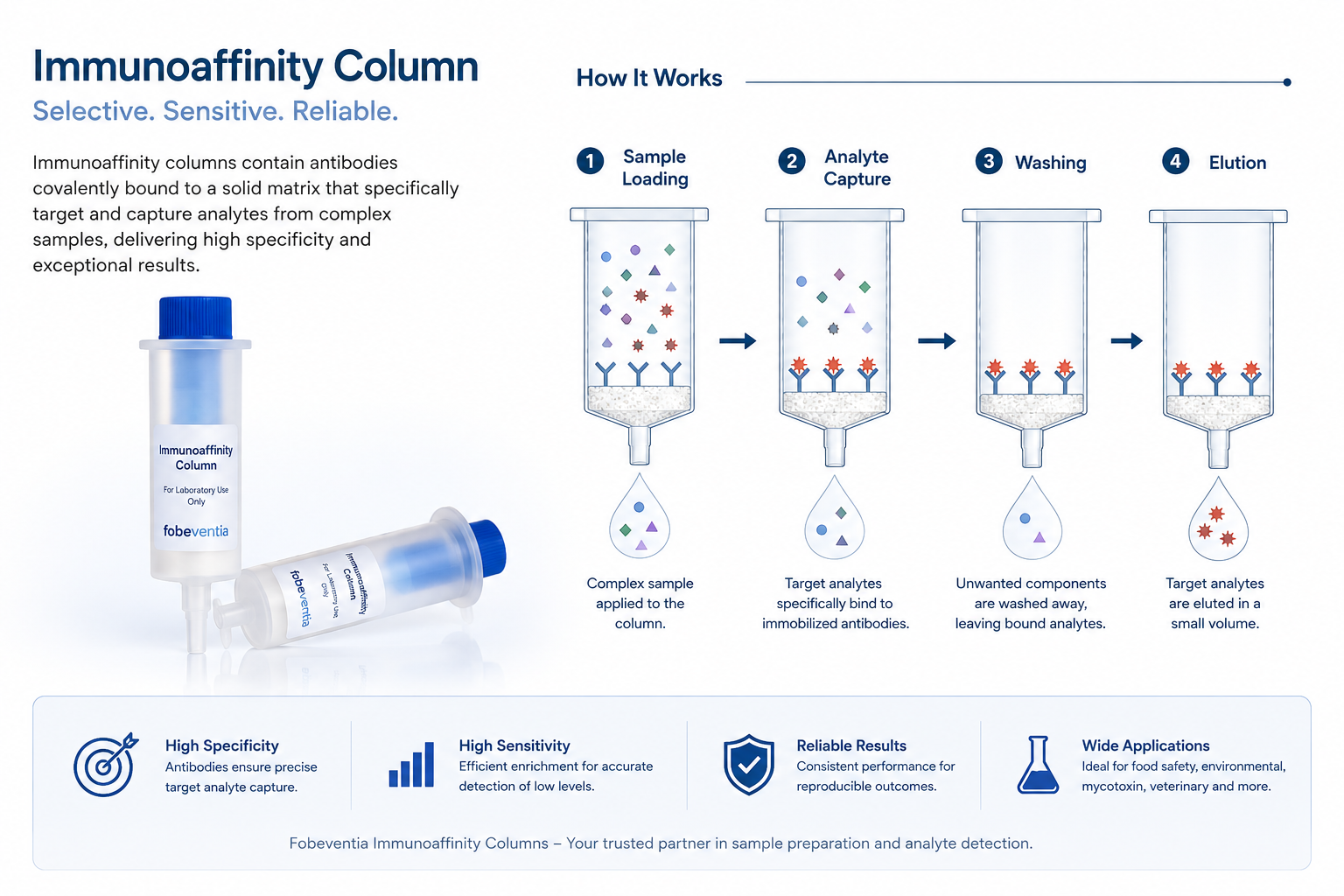
Immunoaffinity Columns are highly selective sample purification devices designed to isolate specific mycotoxins from complex food and feed matrices before instrumental analysis.
Unlike conventional clean-up methods that remove contaminants through physical or chemical interactions, IAC columns utilize high-specificity monoclonal or polyclonal antibodies immobilized within the column. These antibodies selectively bind the target mycotoxin while allowing unwanted matrix components—including proteins, pigments, carbohydrates, fats, and other interfering substances—to pass through.
After washing away impurities, the purified mycotoxin is released using an appropriate elution solvent, resulting in a clean extract that is ideal for quantitative analysis.
The outcome is significantly improved analytical accuracy, enhanced sensitivity, reduced background interference, and longer instrument life.
Why Are IAC Columns Preferred?
Modern food testing laboratories increasingly rely on Immunoaffinity Columns because they offer several important advantages:
Exceptional Selectivity
The antibody-based purification mechanism provides outstanding specificity toward the target mycotoxin, minimizing matrix interference and improving analytical confidence.
Superior Recovery and Reproducibility
High recovery rates and consistent performance are essential for laboratories conducting routine testing under ISO 17025, GMP, GLP, HACCP, and regulatory compliance programs.
Improved Sensitivity
Cleaner sample extracts reduce background noise, allowing analytical instruments to detect mycotoxins at very low concentrations while improving signal-to-noise ratios.
Better Instrument Performance
Removing unwanted matrix components protects expensive HPLC and LC-MS/MS systems from contamination, reduces maintenance requirements, and extends column lifespan.
Reliable Quantification
By minimizing matrix effects, IAC clean-up enables more accurate quantification, particularly when testing samples with complex compositions.
Applications Across the Food and Feed Industry
Immunoaffinity Columns are widely used for testing numerous food and feed products, including:
- Cereals and grains
- Animal feed
- Corn and maize products
- Wheat and barley
- Rice
- Nuts and oilseeds
- Spices
- Coffee and cocoa
- Milk and dairy products
- Infant foods
- Processed food ingredients
- Agricultural commodities
Their ability to handle challenging sample matrices makes them an indispensable tool for food safety laboratories, commercial testing laboratories, government agencies, research institutions, grain processors, feed manufacturers, exporters, and quality assurance departments.
Major Mycotoxins Covered
Dedicated Immunoaffinity Columns are available for many of the worlds most regulated mycotoxins, including:
- Aflatoxins (B1, B2, G1, G2 and Total Aflatoxins)
- Ochratoxin A
- Fumonisins
- Deoxynivalenol (DON / Vomitoxin)
- Zearalenone (ZEN)
- T-2 and HT-2 Toxins
These toxins are among the most frequently monitored contaminants under international food safety regulations due to their impact on human and animal health.
Compatible with Advanced Analytical Techniques
One of the greatest strengths of Immunoaffinity Columns is their seamless integration with modern analytical workflows.
They are widely used prior to:
- High Performance Liquid Chromatography (HPLC)
- Ultra High Performance Liquid Chromatography (UHPLC)
- Liquid Chromatography-Tandem Mass Spectrometry (LC-MS/MS)
- Fluorescence Detection (FLD)
- Regulatory confirmatory methods
The resulting clean extracts help laboratories achieve lower detection limits, higher analytical confidence, and improved compliance with international testing standards.
Choosing the Right IAC Column
Selecting an appropriate Immunoaffinity Column depends on several factors:
- Target mycotoxin(s)
- Sample matrix
- Required detection limits (LOD & LOQ)
- Analytical instrument
- Regulatory requirements
- Laboratory throughput
High-quality IAC columns should demonstrate excellent antibody specificity, consistent flow characteristics, high binding capacity, robust recovery performance, and lot-to-lot consistency.
Pribolab Immunoaffinity Columns from Fobeventia
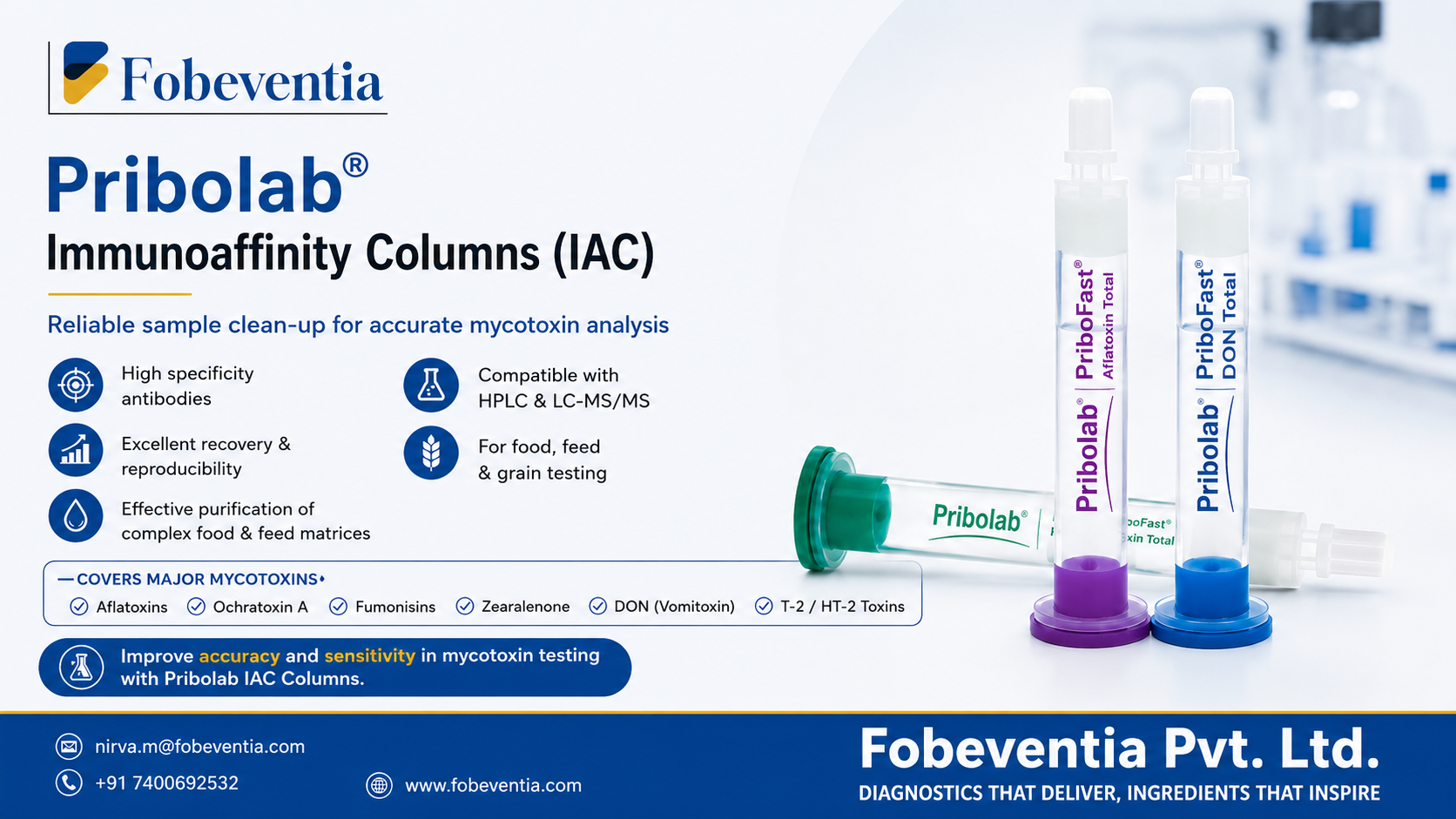
Fobeventia offers Pribolab Immunoaffinity Columns (IAC) designed to deliver reliable sample clean-up for accurate mycotoxin analysis across food, feed, and grain testing applications.
Key benefits include:
- High-specificity antibody technology
- Excellent recovery and reproducibility
- Effective purification of complex food and feed matrices
- Compatibility with HPLC and LC-MS/MS workflows
- Solutions covering major regulated mycotoxins, including Aflatoxins, Ochratoxin A, Fumonisins, Zearalenone, DON, and T-2/HT-2 toxins
Whether you operate a commercial analytical laboratory, food manufacturing facility, grain processing plant, or quality control laboratory, Pribolab IAC Columns help improve analytical accuracy, enhance sensitivity, and deliver dependable results for regulatory compliance.
Conclusion
Accurate mycotoxin testing begins long before the sample reaches the analytical instrument. Effective sample clean-up is fundamental to achieving reliable results, minimizing matrix interference, and ensuring compliance with increasingly stringent food safety regulations.
Immunoaffinity Columns remain the preferred clean-up technology because they combine exceptional specificity, excellent recovery, superior sensitivity, and compatibility with modern chromatographic techniques. As laboratories continue to pursue higher analytical performance and operational efficiency, IAC technology remains an essential component of robust mycotoxin testing workflows.
If your laboratory is looking to improve the reliability of its mycotoxin analysis, Pribolab Immunoaffinity Columns from Fobeventia provide a proven solution for cleaner samples, greater analytical confidence, and consistent regulatory compliance.