Pathogen Detection
What is In-House Pathogen Detection?
In-house pathogen detection refers to rapid microbiological testing performed directly within food manufacturing facilities, dairy plants, beverage processing units, feed mills, environmental laboratories, and quality control departments to identify harmful microorganisms before product release, shipment approval, or production continuation. These testing programs help manufacturers detect microbiological contamination early, reduce food safety risks, and maintain regulatory compliance across modern production environments.
In today’s food and feed industry, preventive food safety has become a critical operational requirement rather than a reactive quality measure. In-house pathogen testing enables manufacturers to identify contamination sources before products enter the market, helping organizations strengthen contamination control strategies, improve sanitation effectiveness, and minimize production risks. Modern testing workflows support environmental surveillance programs, raw material screening, finished product testing, hygiene verification, and process validation across high-risk manufacturing zones.
Food processors increasingly rely on rapid pathogen detection systems to support faster release decisions, reduce quarantine time, improve sanitation monitoring, and strengthen traceability programs. By integrating microbiological monitoring directly into production workflows, manufacturers gain greater control over environmental contamination risks, sanitation failures, and microbial persistence within processing facilities.
In-house pathogen detection is widely used across dairy, spices, ready-to-eat foods, beverages, cocoa processing, nutraceuticals, infant nutrition, poultry, seafood, and animal feed industries, where microbiological safety directly impacts regulatory compliance, export acceptance, and consumer protection.
Why Pathogen Detection is Critical for Food & Feed Safety
Pathogen detection plays a vital role in protecting food products, manufacturing environments, supply chains, and public health from microbiological contamination risks. Harmful microorganisms such as Salmonella, Listeria, E. coli, Campylobacter, and Cronobacter can survive within raw materials, production equipment, environmental niches, and processing environments if not properly controlled.
Foodborne Pathogen Risks
Microbial contamination can originate from multiple sources across the production chain, including contaminated raw materials, poor sanitation practices, employee handling, processing equipment, water systems, air handling systems, and environmental reservoirs. Cross-contamination between raw and finished products remains one of the most significant food safety risks within modern manufacturing facilities.
Poor sanitation practices can allow pathogens to establish persistent contamination zones within drains, conveyor systems, filling lines, and food contact surfaces. Inadequate cleaning procedures, improper zoning, and insufficient environmental monitoring can contribute to pathogen survival and recurring contamination events.
Raw agricultural commodities, including spices, dairy ingredients, cocoa products, meat, poultry, grains, botanical extracts, and feed materials, can also introduce microbiological hazards into processing environments. Environmental reservoirs within manufacturing plants may support long-term pathogen persistence if sanitation controls are ineffective.
Food Safety Risks
Foodborne pathogens can cause severe consumer illness, product recalls, hospitalizations, and public health emergencies. Contaminated products can impact vulnerable populations, including infants, elderly consumers, and immunocompromised individuals. Rapid pathogen detection helps manufacturers reduce contamination risks before products reach distribution channels.
Commercial Risks
Microbiological contamination incidents can lead to export rejection, shipment detention, product destruction, production shutdowns, regulatory action, and major reputational damage. Delayed pathogen detection significantly increases operational losses and brand exposure risks.
Regulatory Risks
Food manufacturers must comply with stringent microbiological requirements established by regulatory frameworks and food safety systems, including the Food Safety and Standards Authority of India, Hazard Analysis and Critical Control Points, Good Manufacturing Practices (GMP), export regulations, environmental monitoring requirements, and customer audit expectations. In-house pathogen detection supports continuous compliance and audit readiness across domestic and international supply chains.
Common Pathogens Tested In-House
Salmonella Detection
Salmonella detection is one of the most critical microbiological testing requirements across food, feed, dairy, spice, cocoa, and nutraceutical industries. Salmonella contamination is commonly monitored in spices, poultry products, dairy ingredients, animal feed, ready-to-eat foods, cocoa products, and low-moisture food systems.
Manufacturers prioritize rapid Salmonella testing because contamination can result in export rejection, severe recalls, and regulatory enforcement actions. Salmonella is particularly challenging because it can survive within dry processing environments and persist in equipment, dust, and environmental niches for extended periods. Effective environmental monitoring and rapid pathogen detection are essential for controlling Salmonella risks in high-risk facilities.
Listeria Detection
Listeria detection is especially important in dairy plants, ready-to-eat food manufacturing facilities, cold processing environments, and refrigerated food systems. Listeria monocytogenes can survive and multiply under refrigerated conditions, making it a major concern for post-processing contamination control.
Environmental monitoring programs are critical for identifying Listeria harborage sites within drains, floors, conveyors, cooling systems, and food contact surfaces. Biofilm formation further increases contamination persistence risks, requiring robust zoning programs and sanitation verification systems.
E. coli Detection
E. coli testing is commonly performed in water systems, dairy operations, beverage manufacturing, fresh produce facilities, and hygiene-sensitive processing environments. Certain strains indicate fecal contamination risks and poor hygienic conditions within production systems.
E. coli monitoring also serves as an important hygiene indicator organism for evaluating sanitation effectiveness, water quality, and process hygiene across food manufacturing environments.
Enterobacteriaceae Monitoring
Enterobacteriaceae monitoring supports hygiene verification, process validation, and sanitation effectiveness assessments. Elevated Enterobacteriaceae levels may indicate poor environmental hygiene, inadequate cleaning, or process contamination risks.
Routine monitoring helps manufacturers identify emerging contamination trends before pathogen levels become critical.
Campylobacter Detection
Campylobacter detection is particularly important within poultry processing facilities due to the organism’s association with poultry contamination and foodborne illness risks. Rapid detection workflows support improved process hygiene and contamination control strategies.
Cronobacter Detection
Cronobacter testing is highly important in infant nutrition manufacturing, dairy powder production, and dry ingredient processing facilities. Infant formula contamination represents a severe food safety concern requiring stringent microbiological controls and environmental monitoring programs.
Yeast & Mold Monitoring
Yeast and mold monitoring is widely used within the bakery, dairy, beverage, nutraceutical, cocoa, and ingredient manufacturing industries. Fungal contamination can impact shelf life, product quality, sensory stability, and mycotoxin risk management programs.
Technologies Used for In-House Pathogen Detection
PCR-Based Pathogen Detection
PCR-based pathogen detection has become one of the most advanced and widely adopted microbiological technologies in modern food safety laboratories. Polymerase Chain Reaction (PCR) technology works through DNA amplification, enabling rapid identification of target pathogens with extremely high specificity and sensitivity.
PCR workflows significantly reduce testing turnaround time compared to conventional culture methods while minimizing false positive and false negative risks. Food manufacturers increasingly use PCR systems for Salmonella, Listeria, E. coli, Campylobacter, and Cronobacter detection across environmental and product testing programs.
Benefits of PCR-based testing include rapid release decisions, improved traceability, higher analytical accuracy, automation compatibility, and enhanced contamination control.
Real-Time PCR Systems
Real-time PCR systems provide quantitative pathogen detection capabilities along with automated workflows, digital result interpretation, and advanced data traceability. These systems support higher throughput testing environments and simplify laboratory documentation for regulatory compliance and audit readiness.
Modern real-time PCR platforms are widely integrated into environmental monitoring programs, finished product testing workflows, and raw material verification systems.
Lateral Flow Pathogen Tests
Lateral flow pathogen tests provide rapid microbiological screening through simple visual interpretation methods. These systems are widely used for fast presumptive screening, environmental testing, and on-site contamination monitoring.
The portability, ease of use, and minimal training requirements make lateral flow systems valuable for field applications and routine production monitoring.
Culture-Based Rapid Methods
Culture-based rapid microbiology methods continue to play an important role in pathogen detection workflows. Chromogenic media systems, ready-to-use microbiological plates, and selective enrichment workflows support simplified microbial identification and routine hygiene monitoring.
Ready-to-use culture systems improve workflow efficiency while reducing media preparation complexity and laboratory handling requirements.
ATP Hygiene Monitoring Integration
ATP hygiene monitoring systems are frequently integrated with pathogen detection programs to strengthen sanitation verification and environmental monitoring strategies. ATP testing helps manufacturers rapidly evaluate cleaning effectiveness before microbiological contamination escalates into pathogen persistence risks.
Combined ATP monitoring and pathogen surveillance programs improve sanitation validation, trend analysis, and contamination prevention across food manufacturing environments.
How In-House Pathogen Detection Works
Step 1 — Sampling
The pathogen detection workflow begins with structured sample collection from environmental surfaces, food products, water systems, air handling units, drains, and processing equipment. Environmental swabbing programs are typically designed using zoning strategies that separate raw, transitional, and high-hygiene processing areas.
Sampling accuracy is critical because poor sampling practices can lead to false negatives and undetected contamination risks.
Step 2 — Enrichment
Enrichment allows injured or stressed pathogens to recover and multiply within selective growth media before detection analysis begins. This step improves analytical sensitivity and increases pathogen recovery efficiency from complex food matrices.
Step 3 — Detection
After enrichment, detection methods, including PCR, lateral flow assays, chromogenic media, and rapid microbiology systems, are used to identify target pathogens. Modern rapid detection systems significantly reduce analysis time compared to traditional microbiological methods.
Step 4 — Result Interpretation
Laboratory personnel evaluate presumptive positive and negative results to determine corrective actions, release decisions, retesting requirements, or further confirmation procedures. Rapid reporting enables faster containment responses and contamination control.
Step 5 — Corrective & Preventive Action
Positive pathogen findings trigger sanitation response activities, root cause investigations, environmental mapping exercises, and corrective action implementation. Continuous monitoring supports preventive food safety management and long-term contamination reduction.
In-House Testing vs External Laboratory Testing
| In-House Testing | External Laboratory Testing |
|---|---|
| Faster decisions | Longer turnaround |
| Immediate corrective action | Delayed response |
| Frequent monitoring possible | Limited testing frequency |
| Better environmental control | Less process visibility |
| Reduced release delays | Logistics dependency |
Environmental Monitoring Programs (EMP)
Environmental Monitoring Programs (EMP) are essential components of modern food safety systems. EMP programs help manufacturers identify contamination risks before pathogens spread into finished products or high-hygiene processing areas.
Comprehensive environmental monitoring includes testing food contact surfaces, drains, air handling systems, equipment frames, employee contact points, and non-food contact zones. Effective zoning concepts divide facilities into risk-based hygiene areas to improve contamination control and sanitation management.
Trend analysis plays a major role in identifying recurring contamination hotspots and sanitation failures. Manufacturers increasingly implement Listeria control programs and Salmonella environmental monitoring strategies to reduce persistent contamination risks within processing facilities.
Sanitation verification programs supported by EMP data improve corrective action planning, process optimization, and audit readiness across regulated food industries.
Industries Using In-House Pathogen Detection
Dairy Industry
Dairy facilities rely heavily on in-house pathogen testing to control Listeria risks, monitor milk contamination, and verify post-pasteurization hygiene effectiveness. Environmental monitoring is critical within cheese, milk powder, yogurt, and ready-to-drink dairy operations.
Spice Industry
The spice industry prioritizes Salmonella monitoring due to high export compliance requirements and elevated contamination risks associated with low-moisture ingredients and imported raw materials.
Beverage Industry
Beverage manufacturers use microbiological monitoring to control spoilage organisms, improve hygiene verification, and maintain process sanitation across bottling and filling systems.
Ready-to-Eat Foods
Ready-to-eat food manufacturers implement intensive environmental monitoring programs because these products receive minimal or no additional cooking before consumption. Listeria control is especially important in high-risk RTE environments.
Feed Industry
Animal feed manufacturers perform Salmonella testing to strengthen raw material safety programs and reduce contamination risks throughout feed production and distribution systems.
Nutraceutical Industry
Nutraceutical companies use pathogen detection programs to support microbiological compliance, botanical ingredient safety, and export certification requirements.
Cocoa & Chocolate Industry
Cocoa and chocolate manufacturers monitor Salmonella risks associated with dry processing systems, cocoa powders, cocoa liquor, and low-moisture ingredient handling environments.
Benefits of In-House Pathogen Detection
In-house pathogen detection provides substantial operational and commercial advantages for food and feed manufacturers. Rapid microbiological testing supports faster release decisions, improved food safety performance, and reduced contamination risks across production environments.
Additional benefits include better sanitation verification, improved audit readiness, reduced recall exposure, stronger export protection, enhanced trend monitoring capabilities, optimized process control, and improved environmental surveillance efficiency.
Real-time contamination visibility allows manufacturers to respond faster to microbiological risks while strengthening preventive food safety systems and regulatory compliance programs.
Common Challenges in Pathogen Detection
Despite advances in rapid microbiology technologies, pathogen detection programs still face multiple operational challenges. False negatives can occur due to poor sampling practices, insufficient enrichment, or uneven pathogen distribution within food matrices.
Environmental persistence within drains, equipment frameworks, and biofilms can complicate contamination control efforts. Matrix interference may impact analytical sensitivity in complex products such as spices, cocoa, dairy powders, and nutraceutical ingredients.
Enrichment failures, contamination hotspots, delayed implementation of corrective actions, and inadequate sanitation validation can also reduce the effectiveness of pathogen control programs.
Choosing the Right Pathogen Detection Solution
Selecting the appropriate pathogen detection system depends on multiple operational and technical considerations. Manufacturers must evaluate testing speed, analytical sensitivity, workflow complexity, throughput requirements, automation capabilities, and laboratory staffing expertise.
Additional considerations include environmental monitoring compatibility, regulatory acceptance, validation status, scalability, data traceability, and integration with existing food safety systems.
Facilities with high-volume testing requirements often prioritize automated PCR workflows, while smaller operations may benefit from simpler rapid microbiology or lateral flow screening systems.
Regulatory & Compliance Standards
Food manufacturers must align pathogen detection programs with regulatory requirements and recognized food safety systems, including the Food Safety and Standards Authority of India, ISO microbiology methods, HACCP principles, GMP requirements, export regulations, and customer audit standards.
Environmental monitoring expectations continue to expand across dairy, ready-to-eat foods, spices, nutraceuticals, feed manufacturing, and ingredient processing industries. Regulatory agencies increasingly expect manufacturers to implement risk-based environmental surveillance and documented corrective action programs.
Export-oriented facilities must also comply with international microbiological standards established by importing countries and global food safety certification programs.
Why Choose Fobeventia
Fobeventia provides advanced in-house pathogen detection solutions designed specifically for the Indian food, feed, dairy, nutraceutical, beverage, and ingredient manufacturing industries. The company combines technical microbiology expertise with practical application support to help manufacturers improve contamination control and food safety performance.
Fobeventia supports customers through workflow optimization assistance, onboarding and training programs, environmental monitoring guidance, troubleshooting support, and implementation planning tailored to Indian manufacturing conditions and regulatory expectations.
The company helps organizations strengthen microbiological monitoring programs, improve sanitation verification systems, and enhance operational efficiency through modern rapid pathogen detection technologies.
Frequently Asked Questions
What is in-house pathogen detection?
In-house pathogen detection refers to microbiological testing performed directly within manufacturing or laboratory facilities to identify harmful microorganisms before product release or shipment.
Why is pathogen testing important in food manufacturing?
Pathogen testing helps prevent foodborne illness, reduce recalls, strengthen sanitation programs, and maintain regulatory compliance.
Which pathogens are commonly tested in food plants?
Commonly monitored pathogens include Salmonella, Listeria, E. coli, Campylobacter, Cronobacter, yeast, and mold.
What is rapid pathogen testing?
Rapid pathogen testing uses advanced technologies such as PCR, lateral flow assays, and rapid microbiology systems to accelerate contamination detection.
How does PCR pathogen detection work?
PCR testing amplifies pathogen DNA sequences to identify target microorganisms with high sensitivity and specificity.
What is environmental monitoring?
Environmental monitoring involves testing processing environments, equipment, and surfaces for microbiological contamination risks.
What is the difference between ATP testing and pathogen testing?
ATP testing evaluates cleaning effectiveness, while pathogen testing specifically identifies harmful microorganisms.
Why is Salmonella testing important in spices?
Spices are high-risk, low-moisture products frequently associated with export rejections and contamination incidents involving Salmonella.
What is Listeria environmental monitoring?
Listeria environmental monitoring involves routine testing of production environments to identify contamination harborage sites and prevent product contamination.
Can pathogen testing be performed on-site?
Yes, many modern rapid microbiology systems are designed for in-house and on-site testing applications.
What industries require pathogen detection?
Industries including dairy, feed, spices, nutraceuticals, beverages, cocoa processing, seafood, poultry, and ready-to-eat foods require pathogen monitoring.
How quickly can pathogen results be obtained?
Rapid PCR systems can provide results within hours, while traditional culture methods may require several days.
What is enrichment in microbiology?
Enrichment is a microbiological process that promotes pathogen recovery and selective growth before detection analysis.
What are chromogenic media methods?
Chromogenic media contain color-producing substrates that help identify microorganisms through visible colony differentiation.
What is the role of EMP programs?
Environmental Monitoring Programs help identify contamination trends, sanitation failures, and pathogen persistence risks.
Can rapid tests replace conventional microbiology?
Rapid tests often complement conventional microbiology methods, although many validated rapid systems are accepted for routine food safety testing.
How can food manufacturers reduce contamination risks?
Manufacturers can reduce contamination risks through sanitation control, environmental monitoring, employee hygiene, zoning, and preventive food safety programs.
What are the challenges in pathogen detection?
Common challenges include false negatives, poor sampling, environmental persistence, enrichment failures, and matrix interference.
Which industries use PCR testing?
PCR testing is widely used across dairy, feed, beverages, spices, nutraceuticals, ready-to-eat foods, and cocoa industries.
What is corrective action after a positive pathogen result?
Corrective action may include sanitation response, root cause analysis, product hold decisions, environmental mapping, and intensified monitoring activities.
Our Offering
NEMIS® Technologies
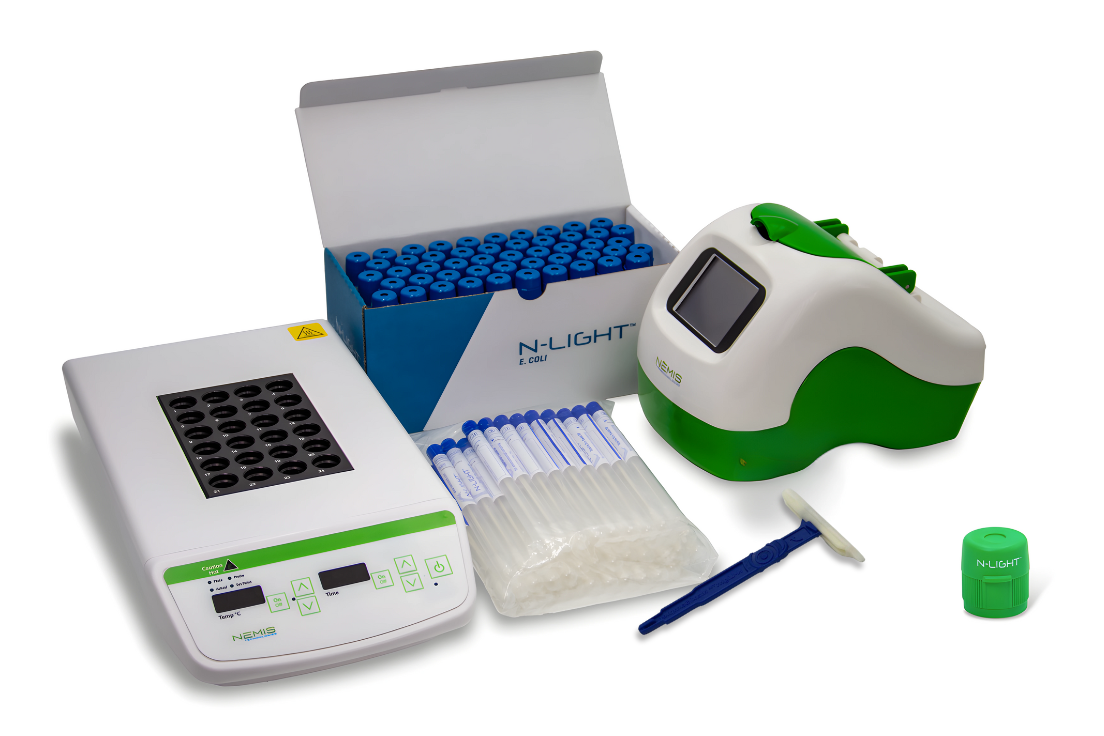
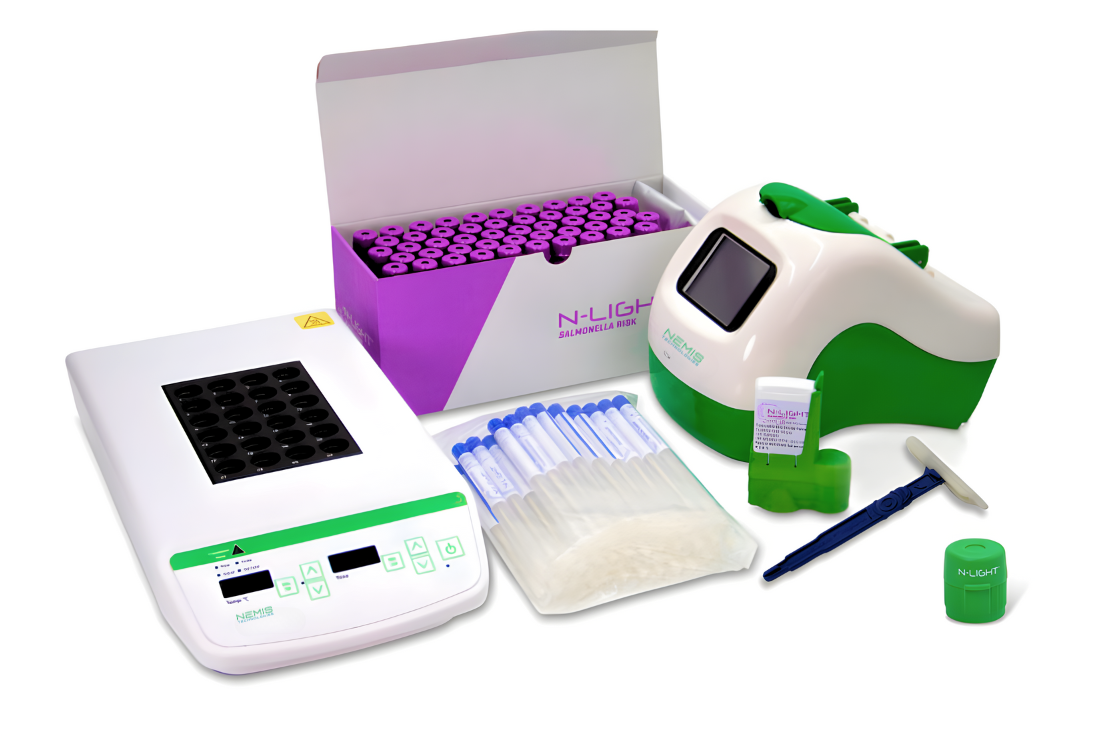
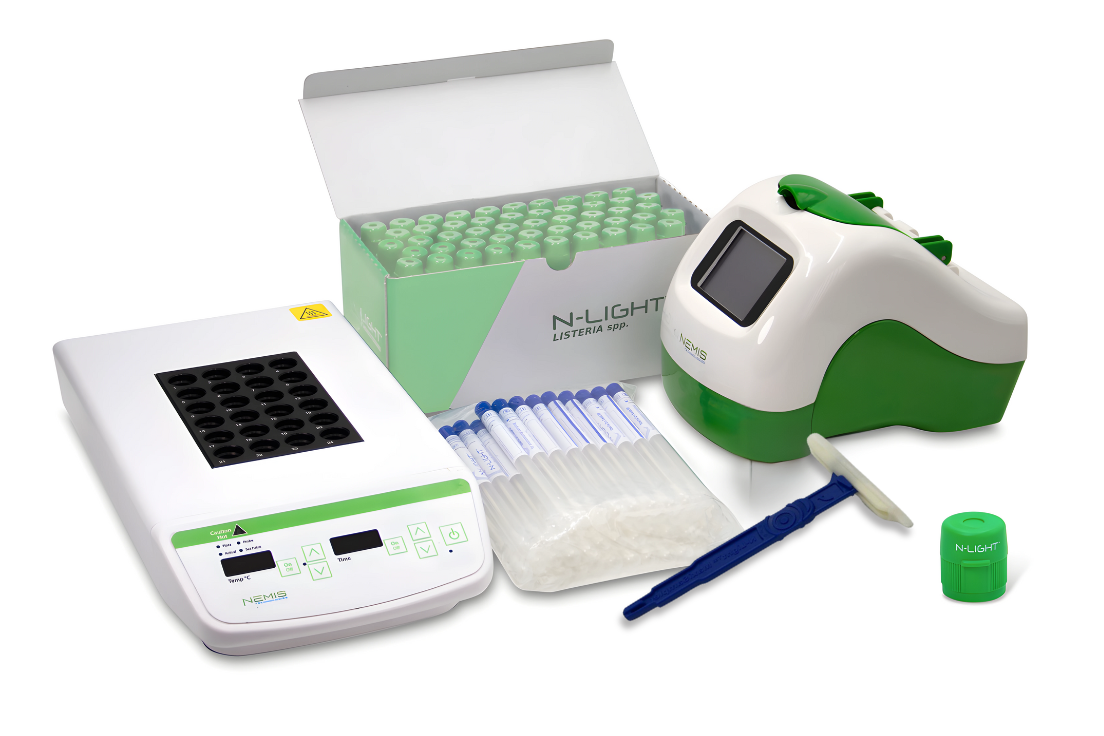
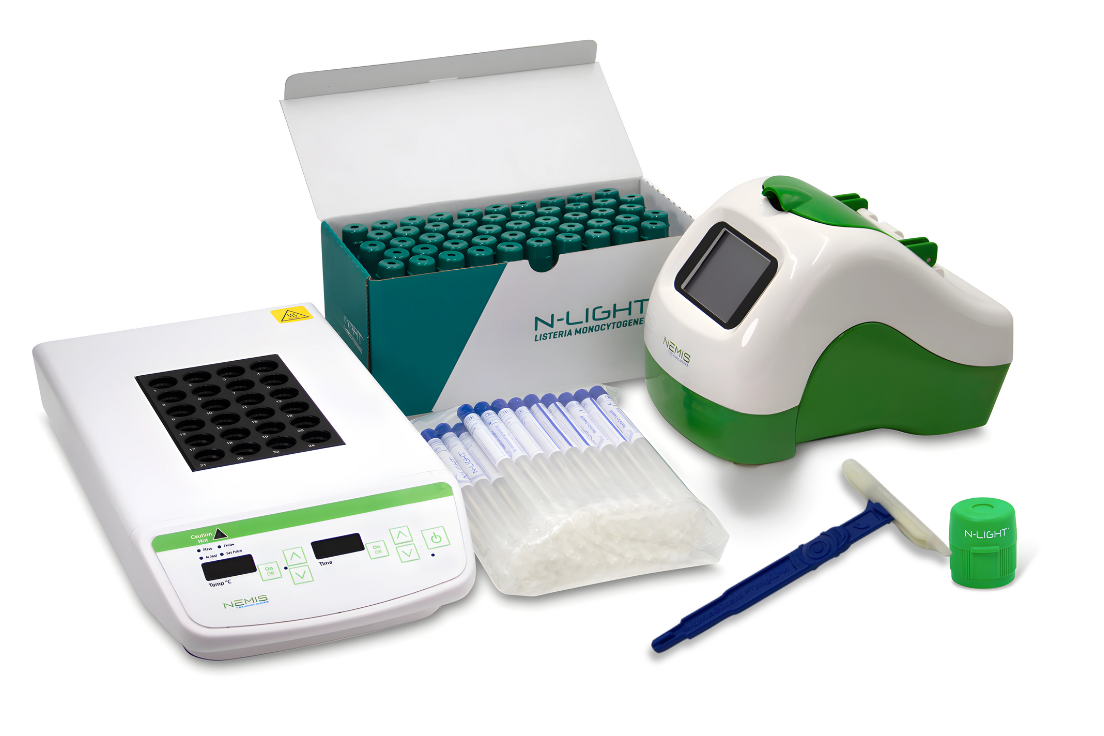
At Fobeventia, we bring to you NEMIS® – next-generation pathogen detection systems designed for fast, reliable, and on-site microbiological testing. NEMIS products offer a simple, culture-based approach that combines accuracy with ease of use, making them ideal for food, beverage, dairy, pharmaceutical, and environmental hygiene monitoring.
With ready-to-use, self-contained test devices, NEMIS enables the detection of key pathogens such as Salmonella, Listeria, E. coli, and other critical microorganisms without the need for complex laboratory infrastructure. The tests are validated, cost-effective, and easy to interpret, helping quality teams take quick corrective actions and maintain compliance with food safety standards.
Whether you are performing routine hygiene monitoring or pathogen screening, NEMIS products provide a reliable solution to protect product quality, consumer safety, and brand reputation.